
Emsella: A pelvic floor workout, without having to do a thing
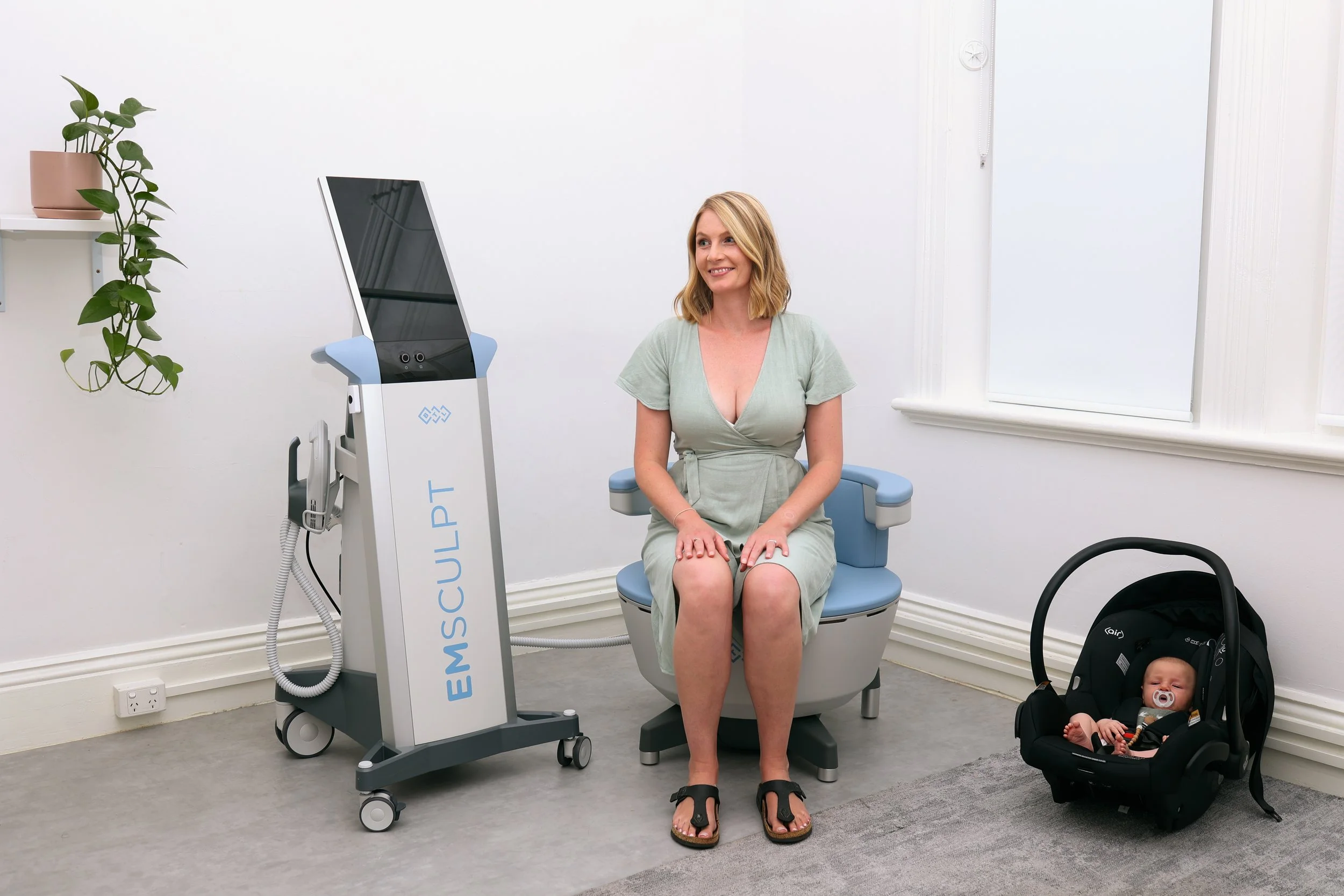
If you've ever struggled to feel, find, or consistently exercise your pelvic floor, you're not alone. Our HIFEM magnetic stimulation device offers a completely different approach — one that does the contracting for you, while you simply sit back and relax.
Pelvic floor muscle training is one of the most effective treatments available for leakage and prolapse. The evidence is strong, the results are real — but there's one catch. It only works if you can actually do it.
For many women, that's harder than it sounds. Finding the right muscles, contracting them correctly, and doing it consistently enough to make a difference is a genuine challenge. Some women simply can't feel or isolate their pelvic floor at all. Others find the motivation to keep up home exercises difficult to sustain. And some are dealing with discomfort, sensitivity, or a strong preference to avoid internal examination or treatment.
That's exactly where magnetic stimulation comes in.
So what is HIFEM magnetic stimulation, exactly?
HIFEM stands for High-Intensity Focused Electromagnetic technology. It's a non-invasive treatment that uses electromagnetic energy to stimulate your pelvic floor muscles into contracting — deeply, repeatedly, and at an intensity that would be almost impossible to achieve through voluntary effort alone.
You sit fully clothed on a specially designed chair, called the Emsella. The device does the work with no probes, no internal assessment, and no undressing. Just a treatment session where your muscles contract and relax in carefully calibrated sequences, coordinated by our physiotherapists who customise the intensity to suit you.
How a session works
01 You sit fully clothed in our specialist HIFEM chair. No preparation needed — just show up in comfortable clothing.
02 Electromagnetic energy passes through the chair and into your pelvic floor, triggering deep muscle contractions.
03 Your physio controls the intensity, adjusting to your comfort and increasing gradually across your programme.
04 Each 20–30 minute session is equivalent to thousands of pelvic floor contractions — without any effort from you.
What can it help with?
Magnetic stimulation has been studied for a range of pelvic floor conditions. At Ivoryrose, we use it as part of a comprehensive, physiotherapy-led approach for:
Stress urinary incontinence
Leakage when you cough, sneeze, laugh, jump or exercise. One of the most common pelvic floor complaints.
Pelvic organ prolapse
A sensation of heaviness, bulge, or pressure in the vaginal area. Particularly suited to mild prolapse (Stage 1–2).
Urgency and urge incontinence
A sudden, strong need to rush to the toilet.
Pelvic floor weakness
Difficulty engaging or feeling your pelvic floor, often following childbirth, menopause, or surgery.
What does the research show?
The evidence base for magnetic stimulation has grown significantly in recent years. Here are some of the headline findings from current research:
90% of women reported symptom improvement after a course of treatment
38% described their results as "much" or "very much" improved
100% treatment completion rate — zero adverse events reported
A 2026 systematic review and meta-analysis of 17 studies involving nearly 1,400 women with stress urinary incontinence found that magnetic stimulation produced statistically significant improvements in symptom scores and urethral function compared to control groups. Research into its use for pelvic organ prolapse is newer — but the early results are encouraging, with meaningful patient-reported improvements after just 8 sessions.
A NOTE ON THE EVIDENCE
Like all newer treatments, the research for magnetic stimulation is still developing — and we'll always be transparent about that with you. What we can say is that the current evidence is genuinely promising, and for many women it offers benefits that standard exercises alone don't achieve. Our physiotherapists will discuss whether it's the right option for your specific situation at your initial assessment.
Is it right for me?
Magnetic stimulation is particularly well suited to women who:
Struggle to feel or activate their pelvic floor
If you've been told to "just do your kegels" without much success, this technology bypasses the need to consciously contract at all.
Prefer to avoid internal treatment
Completely external. Fully clothed. No internal probe, no examination. Many women find this a significant
relief.
Have struggled with consistent home exercise
In-clinic sessions with your physio provide structure, accountability, and results — without relying on daily willpower.
Want to complement their PFMT programme
Magnetic stimulation works beautifully alongside your regular physio sessions, not instead of them.
The goal is always to get you doing your own pelvic floor training with confidence. Magnetic stimulation can be the bridge that gets you there.
What to expect from your programme
YOUR TREATMENT JOURNEY
Initial assessment with your physiotherapist: We'll assess your pelvic floor, understand your symptoms, and determine whether magnetic stimulation is the right fit for you — and what we'd expect it to achieve.
Your treatment course begins (2–3 sessions per week): Sessions are 20–30 minutes. You'll remain fully clothed throughout. Most women notice a sensation of gentle muscle contractions — unusual at first, but not painful. Research shows that many women begin noticing changes within the first few weeks. Your physio will adjust intensity as your muscles respond and strengthen.
Ongoing progress and review: We'll check in regularly on how your symptoms are changing. For most women, results continue to build progressively across the full programme.
End of programme: We'll reassess and review together, celebrate your progress, and plan what ongoing support — whether that's continued sessions, group classes, or home exercises — makes the most sense for you.
Frequently asked questions
Does it hurt?
No — but it does feel unusual! You'll feel your pelvic floor muscles contracting, which can feel like a strong pulsing sensation. It's not painful, and your physiotherapist will always start gently and increase intensity at a pace that's comfortable for you. In the research, 100% of patients completed their full treatment course — which says a lot about tolerability.
Do I need to do anything to prepare?
Just come as you are — comfortable clothing is ideal. There's no need to undress, and no internal preparation of any kind. Empty your bladder beforehand and you're ready to go.
How many sessions will I need?
Most programmes involve 8 sessions over 4 weeks, with sessions two to three times per week. Research for stress incontinence has used programmes of 4–12 weeks. Your physiotherapist will recommend a programme tailored to your presentation and goals.
Is it a replacement for pelvic floor exercises?
We think of it as a powerful addition to your pelvic floor care, rather than a replacement. For women who've been unable to make progress with exercises alone, it can be a genuine breakthrough. And for many, it builds the muscle awareness that makes self-directed exercise easier and more effective afterwards.
Is it suitable for me if I have a pessary or have had pelvic surgery?
This depends on your individual situation and will be assessed at your initial appointment. There are some contraindications (including certain implanted devices and some pregnancy situations), which your physiotherapist will check carefully before recommending treatment.
Ready to find out if it's right for you?
Book an initial assessment with one of our women's health physiotherapists. We'll take the time to understand your symptoms, answer all your questions, and recommend the approach that's genuinely right for your situation.
Evidence references: Li N et al. Int J Gynaecol Obstet. 2026 May;173(2):686-697 · De Vicari D et al. Medicina (Kaunas). 2025 Dec 11;61(12):2198. Individual results vary. Magnetic stimulation is recommended as part of a comprehensive physiotherapy programme and is subject to clinical assessment for suitability. Speak to your Ivoryrose physiotherapist for personalised advice.